A casino never knows the next card. It knows the odds, it sizes every bet, and it takes every hand — which is why the house wins over time. Signal Scanner puts you on the house’s side of a crypto futures trade: a measured 69.8% win rate, a complete plan for every trade, and the discipline to take only the setups that have already proven themselves.
Get the alerts$499$189 a month — cancel anytimeMost signal services sell conviction — someone’s opinion that a coin is about to move. Opinions don’t compound. Odds do.
Signal Scanner never tries to call the next candle. It replayed every alert it could have fired over two years of real market history, traded each one eighty different ways, and kept only the setups that made money after fees. Then it attached a rule to every one: where the idea is wrong (your Stop Loss), how a winner is allowed to run (a trailing stop), and exactly how much to put on (your Quantity in USDT).
That is what a casino has that a gambler doesn’t: not a crystal ball, but a known edge, a fixed bet size, and the patience to let the numbers play out. Signal Scanner is that edge, packaged for a crypto futures account.
Every 4-hour close, up to 100 liquid coins are checked against the same rules that were backtested. No human in the loop, no mood, no missed candles.
Only a Best Setup gets through: a breakout — or a strong trend continuation — in the direction of the coin’s daily trend, clear of major US economic releases, whose own history is positive after costs. Everything else is held back.
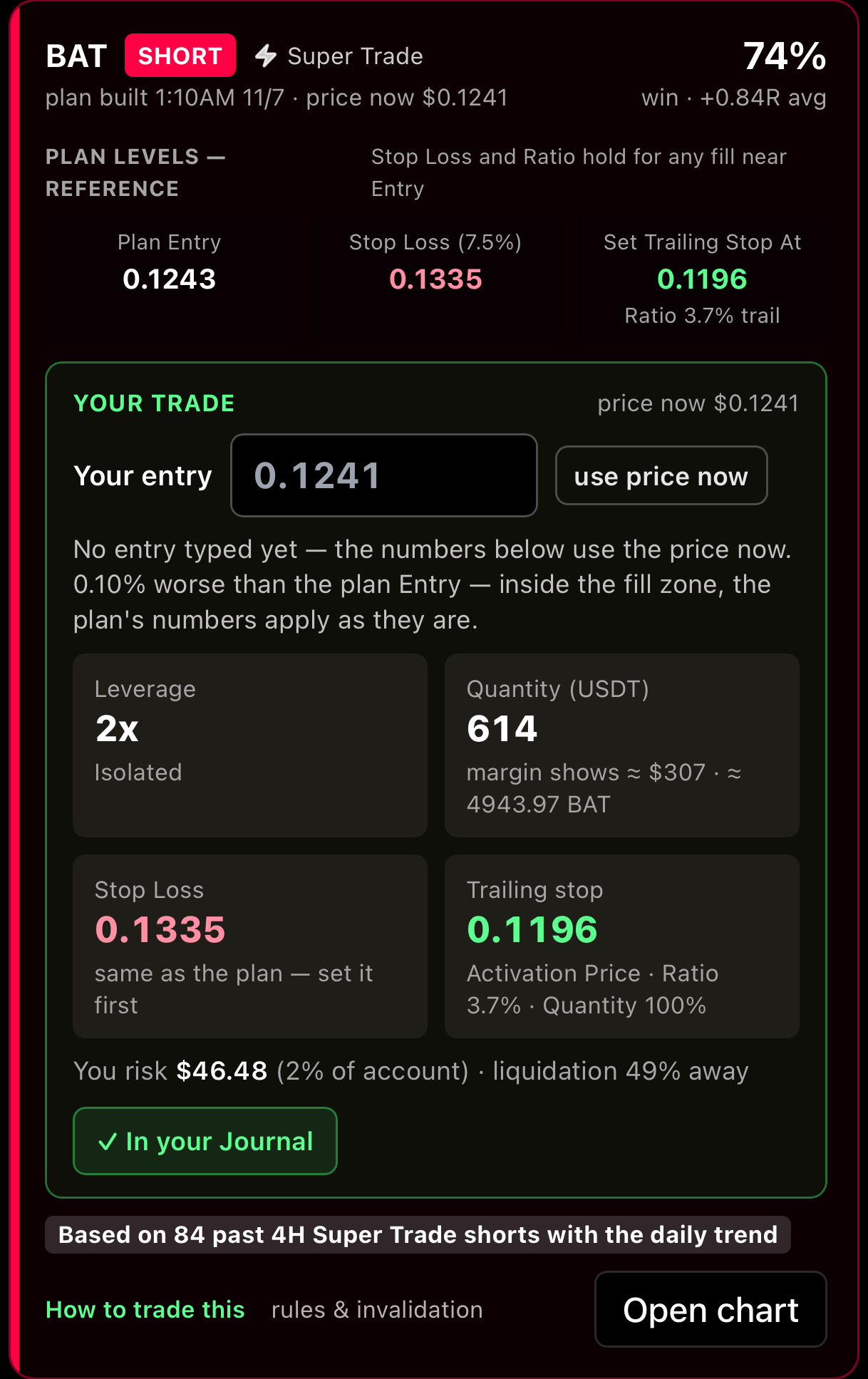
A Best Setup becomes a sized plan on your phone: Entry, Stop Loss, where to set the trailing stop, Quantity in USDT and leverage. Type your fill price and the numbers recompute. Placed in two minutes.
One message if the plan goes back to WAIT, closes, or pauses. Your Journal closes the trade itself when the plan’s exit rule triggers — Won, Lost or Break-even — and tells you.
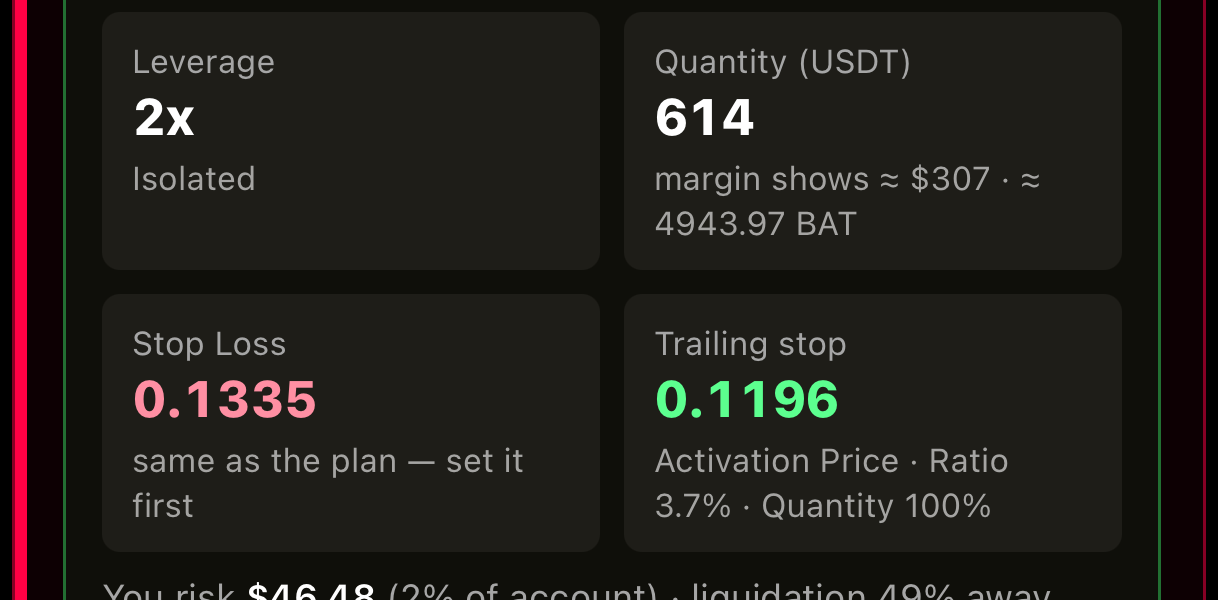
Every Best Setup arrives as a complete plan: the direction, the Entry, the Stop Loss, the exact price to set your trailing stop, the Quantity in USDT, the leverage and the margin your exchange should show. Under it, Your trade — type the price you actually got and every number recomputes, with a plain-words line telling you whether the plan still applies.

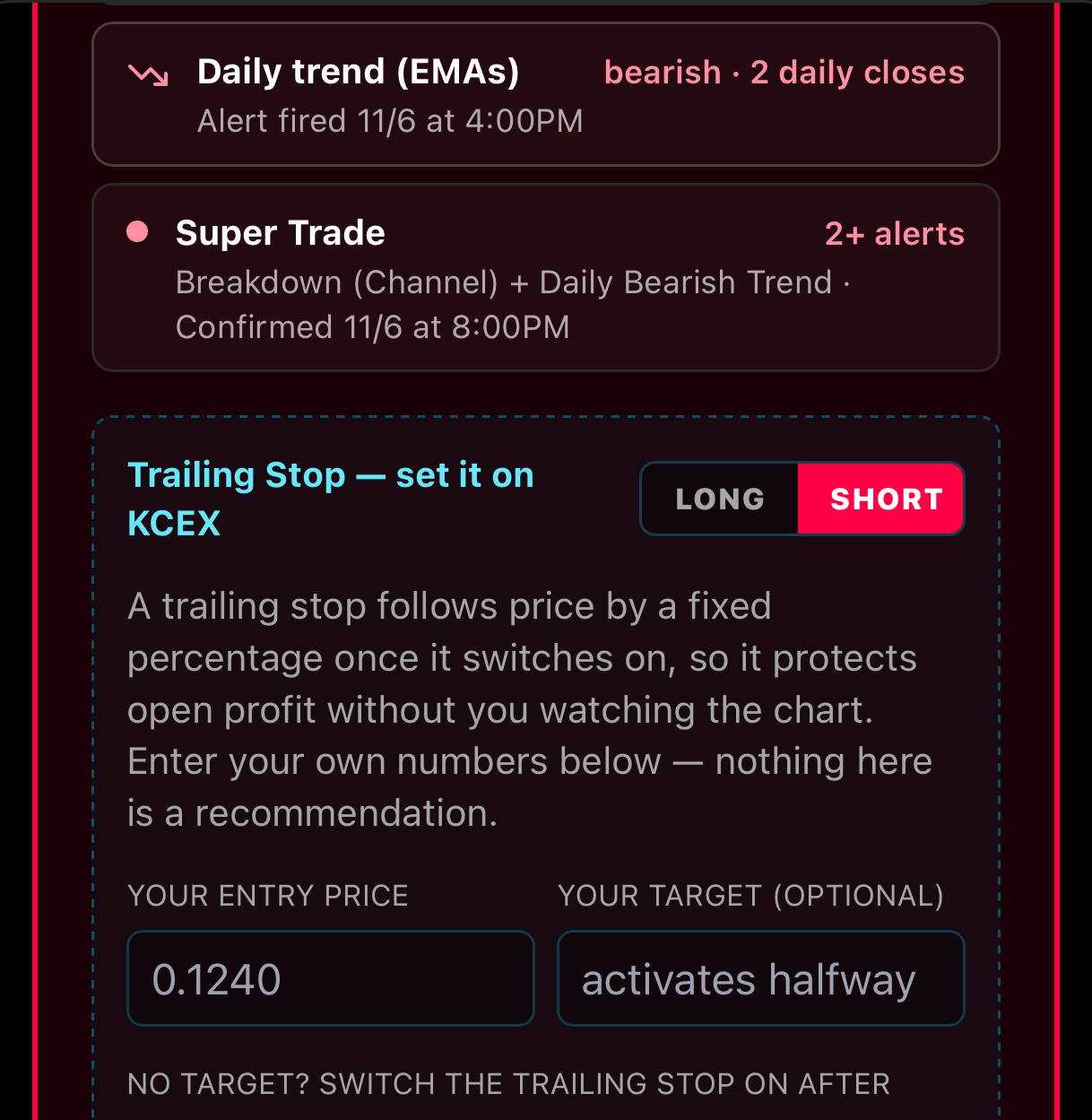
Every coin page lists the signals the app checked and when each one confirmed, so you can see why a setup made the cut. Under it, the trailing-stop helper: type the price you got and it gives you the activation price and the ratio to enter on your exchange. Below every plan sit the numbered steps — entry, Stop Loss first, then the trailing stop, then nothing else. Follow them and you traded it the way it was measured.

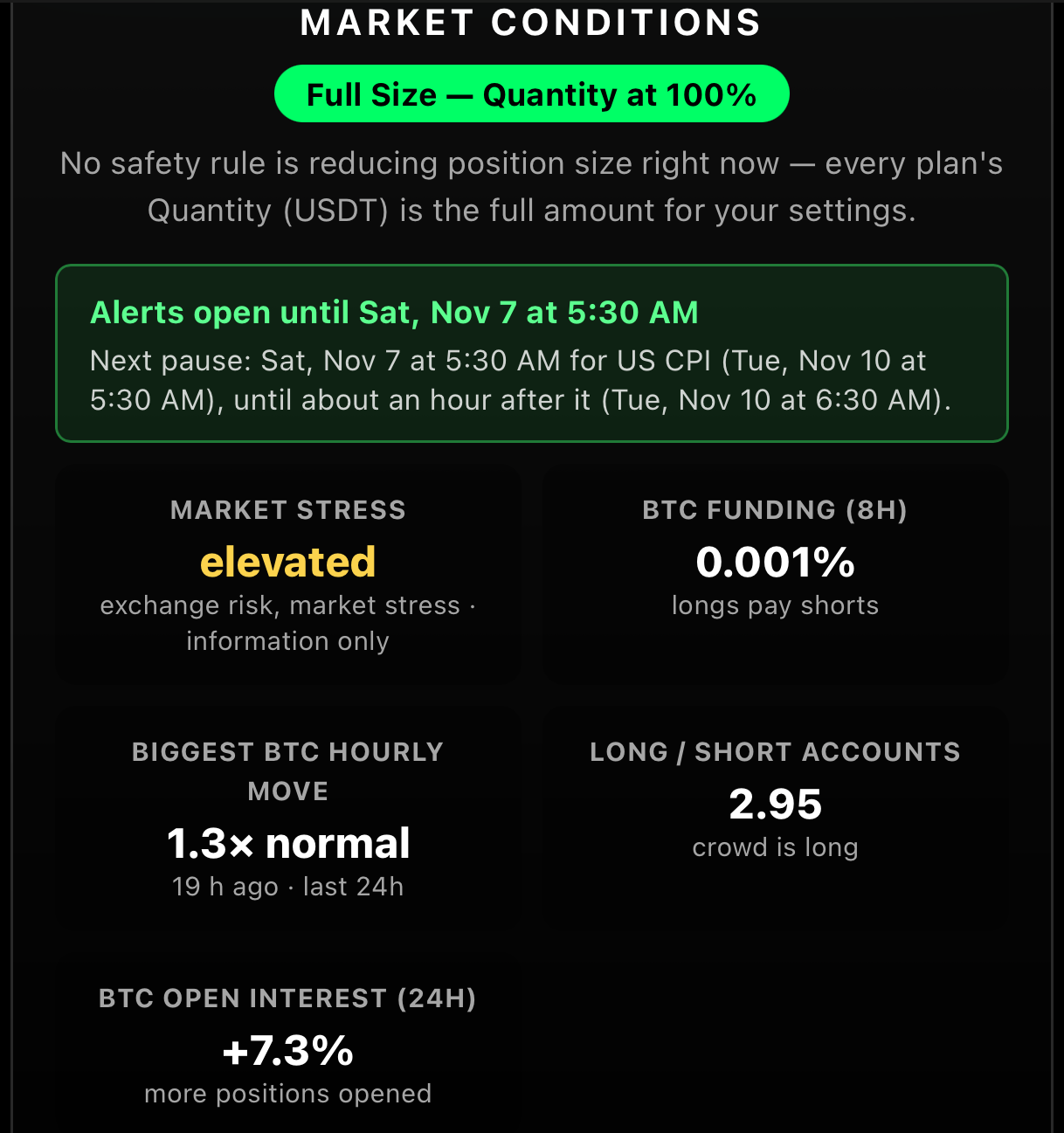
The same setups that win seven in ten made almost nothing in the three days before a Fed decision, a CPI print or a jobs report — so the app pauses them and tells you exactly when alerts resume, in your time zone. When Bitcoin is having a violent day, position size is cut in half; most of the time the status simply reads Full Size — Quantity at 100%. Every pause and every size cut is backed by a measured loss, never a feeling.

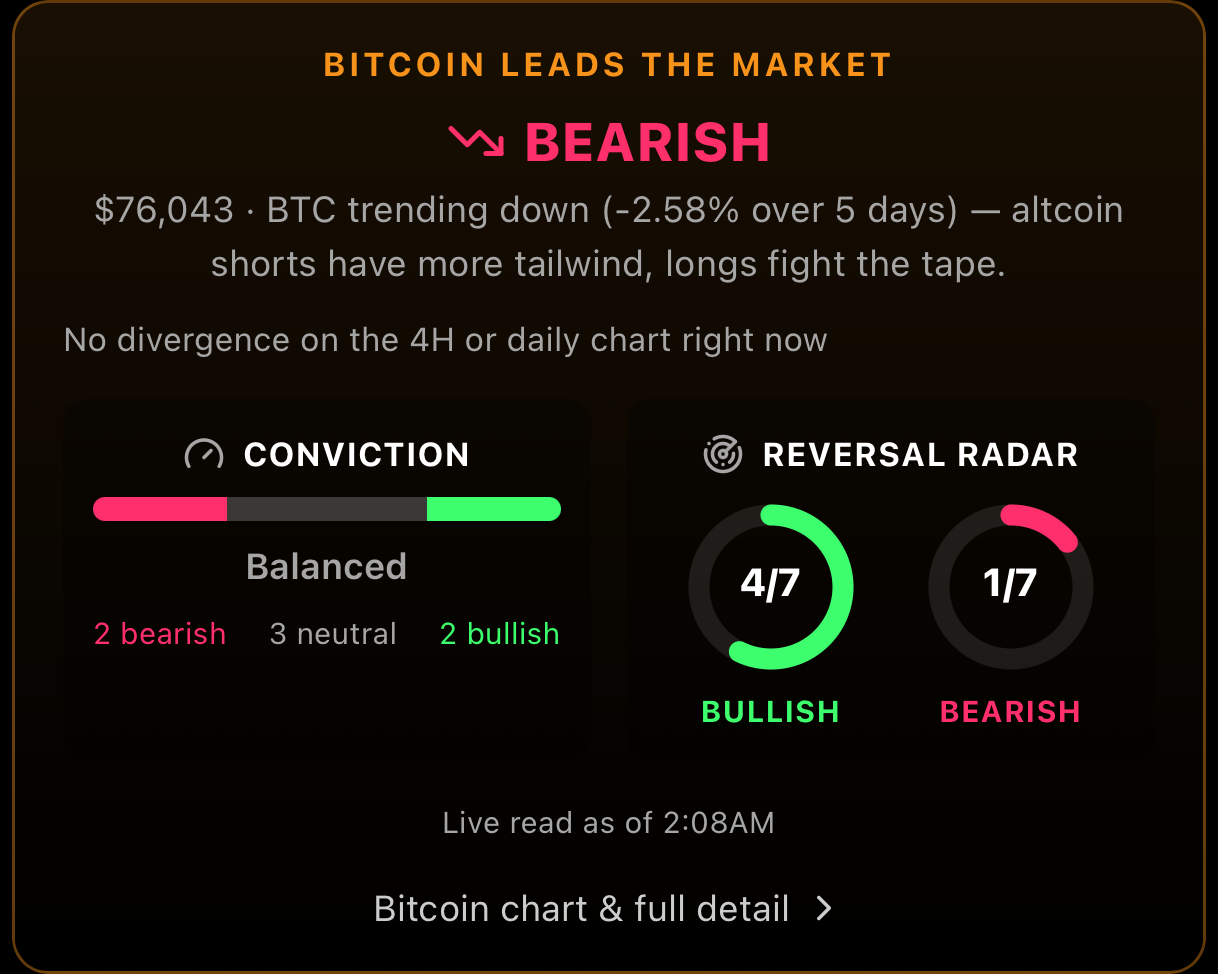
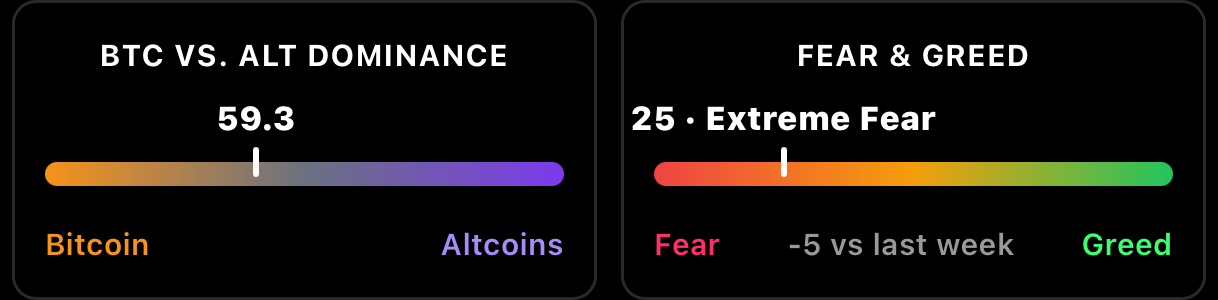
Altcoins follow Bitcoin, so the home screen opens with Bitcoin’s trend and conviction read, dominance versus altcoins and the Fear & Greed index — so you know which side of the market has the tailwind before you look at a single plan.


Enter your account size, the percent you risk per trade and the most you want open at once. From then on every plan and every Telegram message is written in the one number your exchange asks for — Quantity in USDT — with the margin it should show and a leverage that keeps liquidation far from your stop. Position size always comes from the stop distance, never from a hunch.

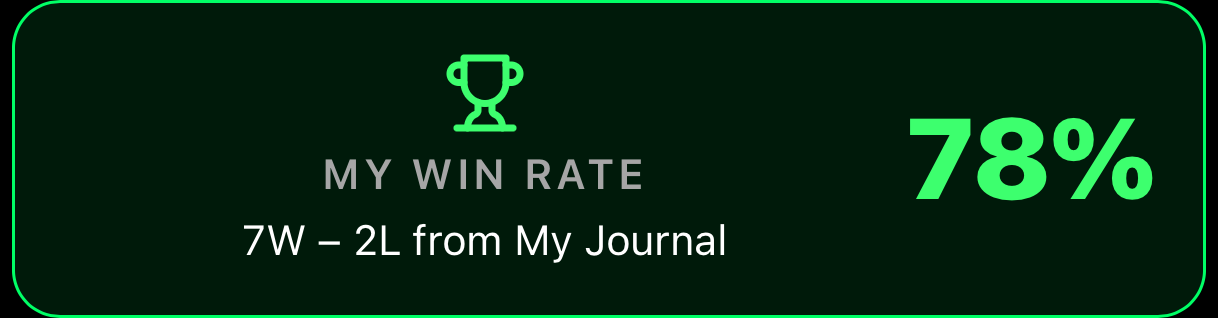
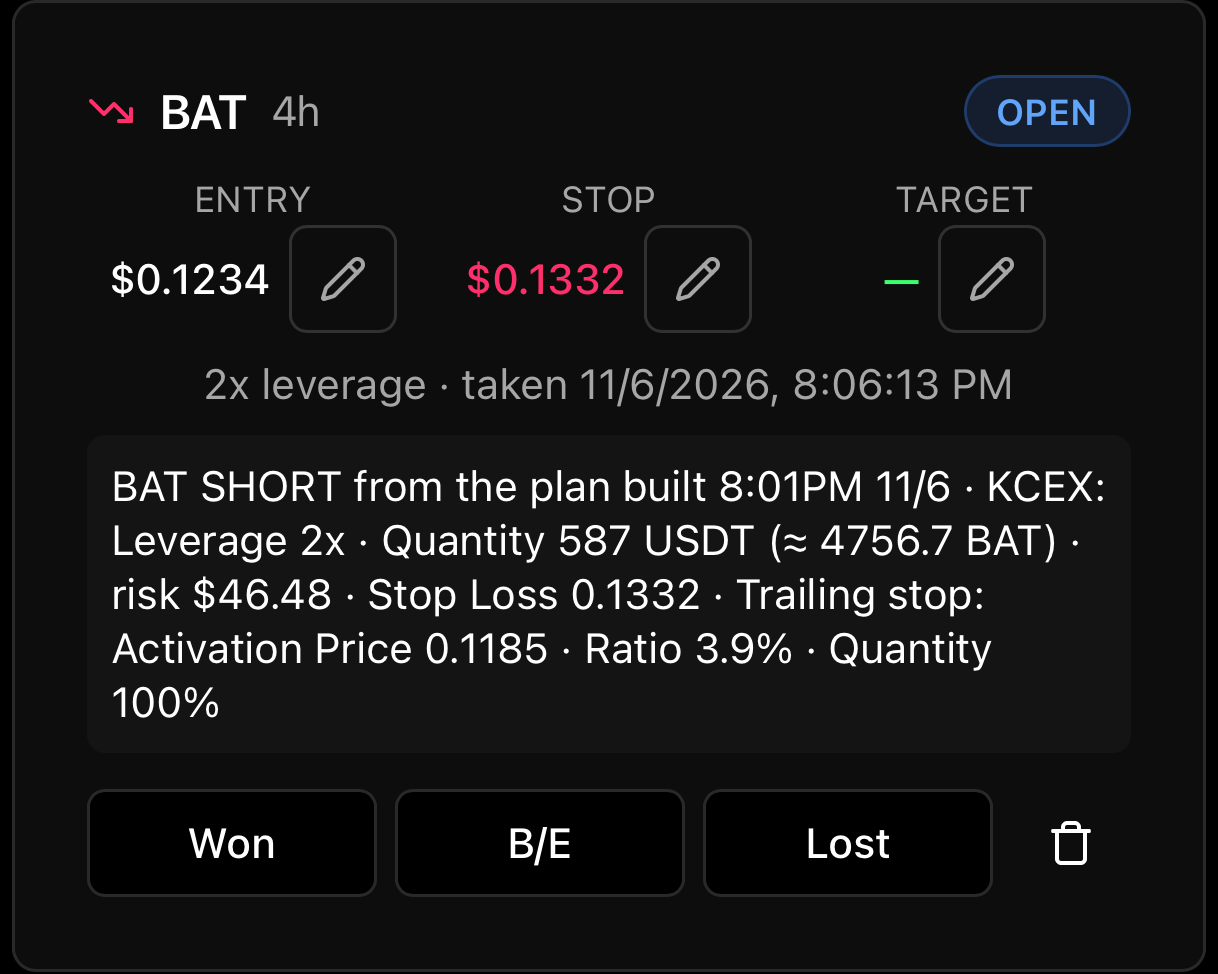
Tap Add to my Journal and the plan’s exit rules travel with the entry. From then on the app watches the candles for you: Stop Loss hit, trailing stop fired or time limit reached — the trade is closed as Won, Lost or Break-even, the result is recorded in R, and you get one line on Telegram. Your own win rate builds itself, coin by coin.


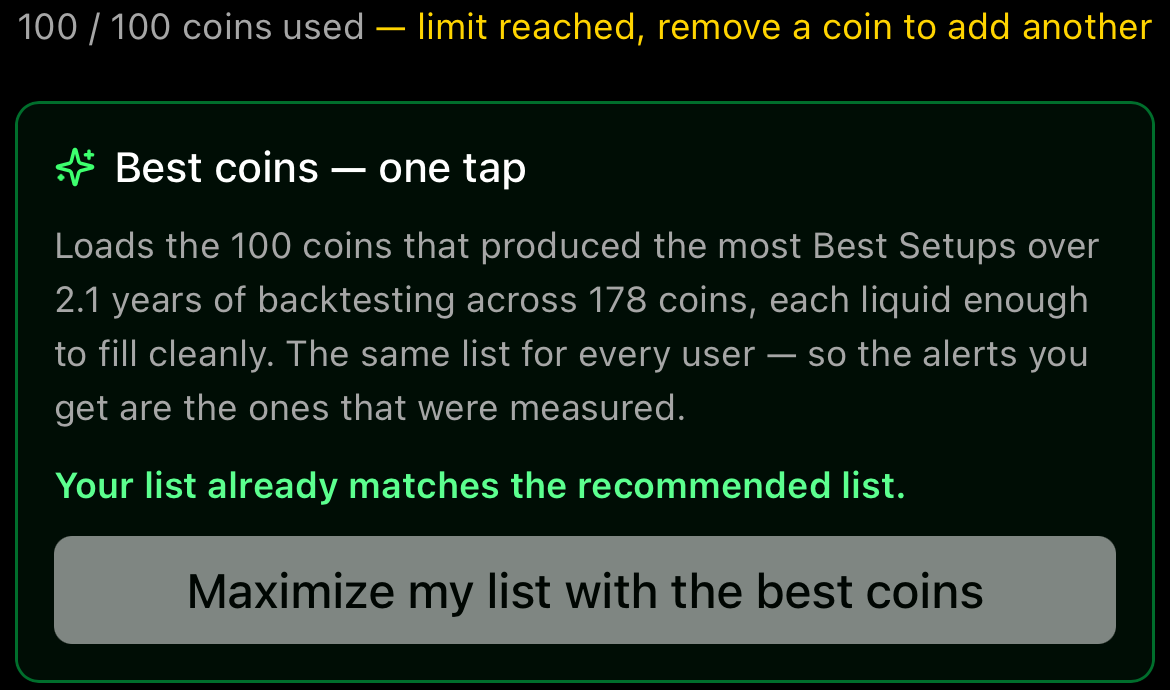
Don’t guess which coins to watch. One button loads the 100 coins that produced the most Best Setups across the whole measurement, each liquid enough to fill cleanly. Every member runs the same list, so the alerts you get are the ones that were actually measured — not a hunch about what might move.

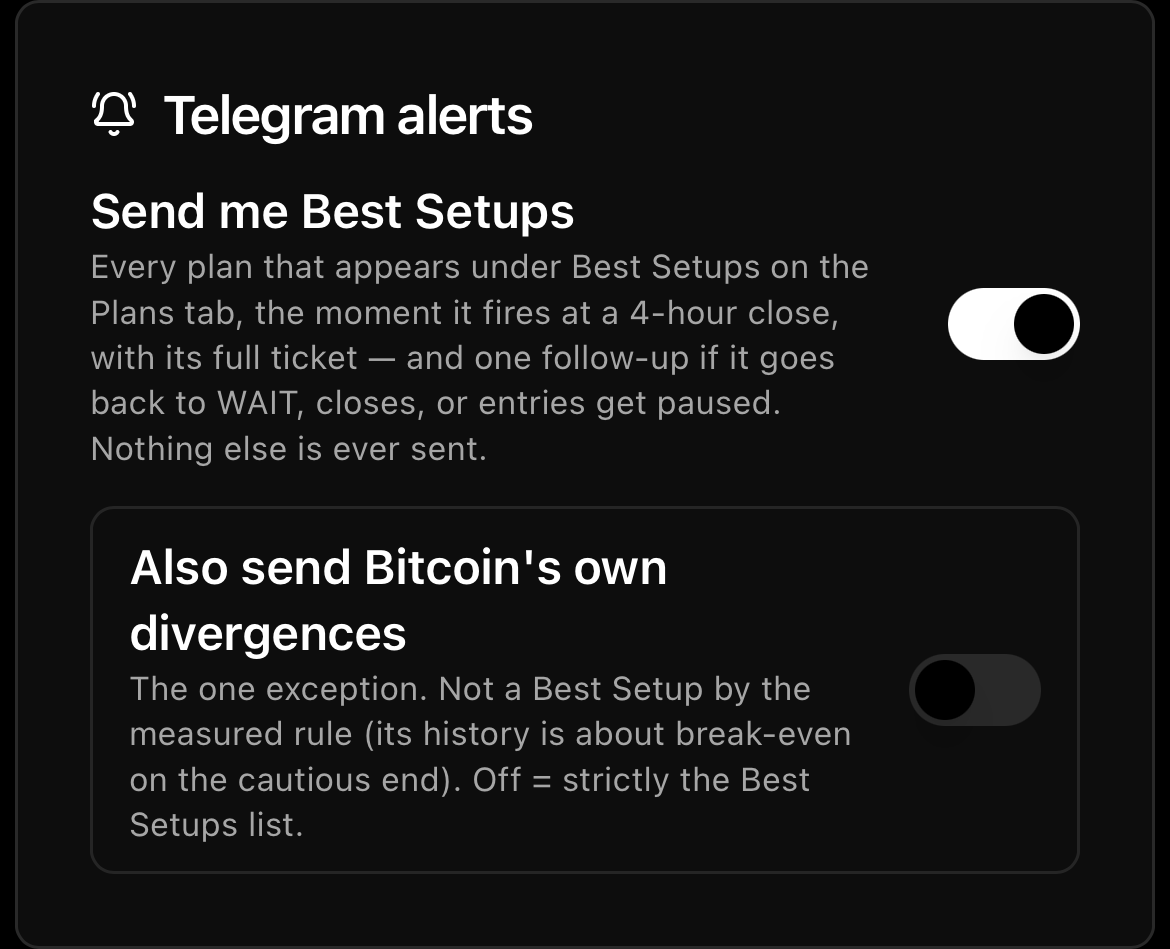
Best Setups reach your phone the moment they fire at a 4-hour close, with the full ticket and your sizing. One follow-up if the plan goes to WAIT, closes or pauses — and that’s all. No indicator spam, no “watch this coin” noise, no twenty alert types to configure. Silence means nothing qualified.

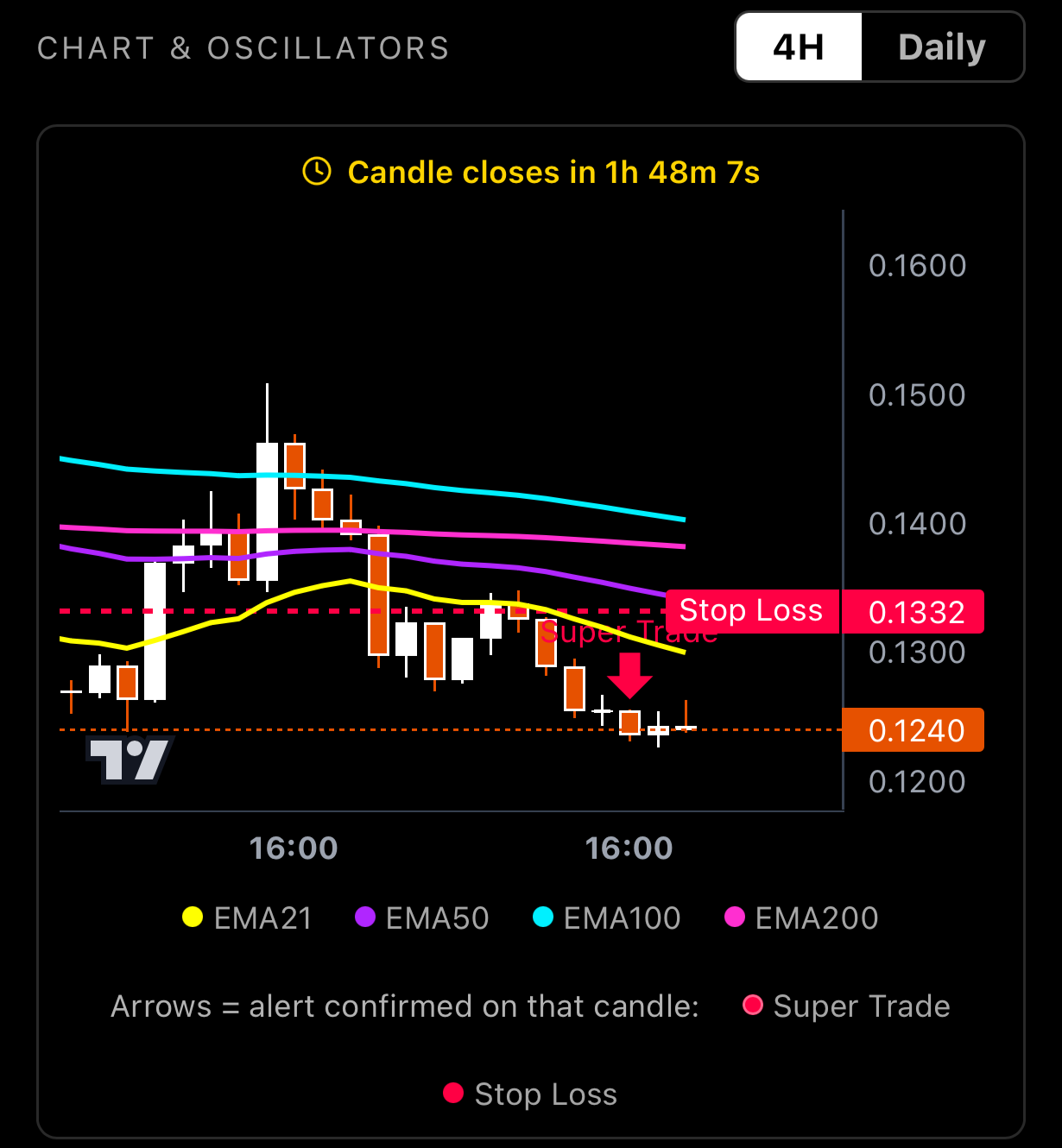
Tap any plan and see the alert on the chart that produced it: the arrow on the candle that confirmed, the Stop Loss line, the moving averages that define the trend, and the Signal Scanner Oscillator underneath. A countdown shows when the next 4-hour candle closes, so you always know when the next decision is made.

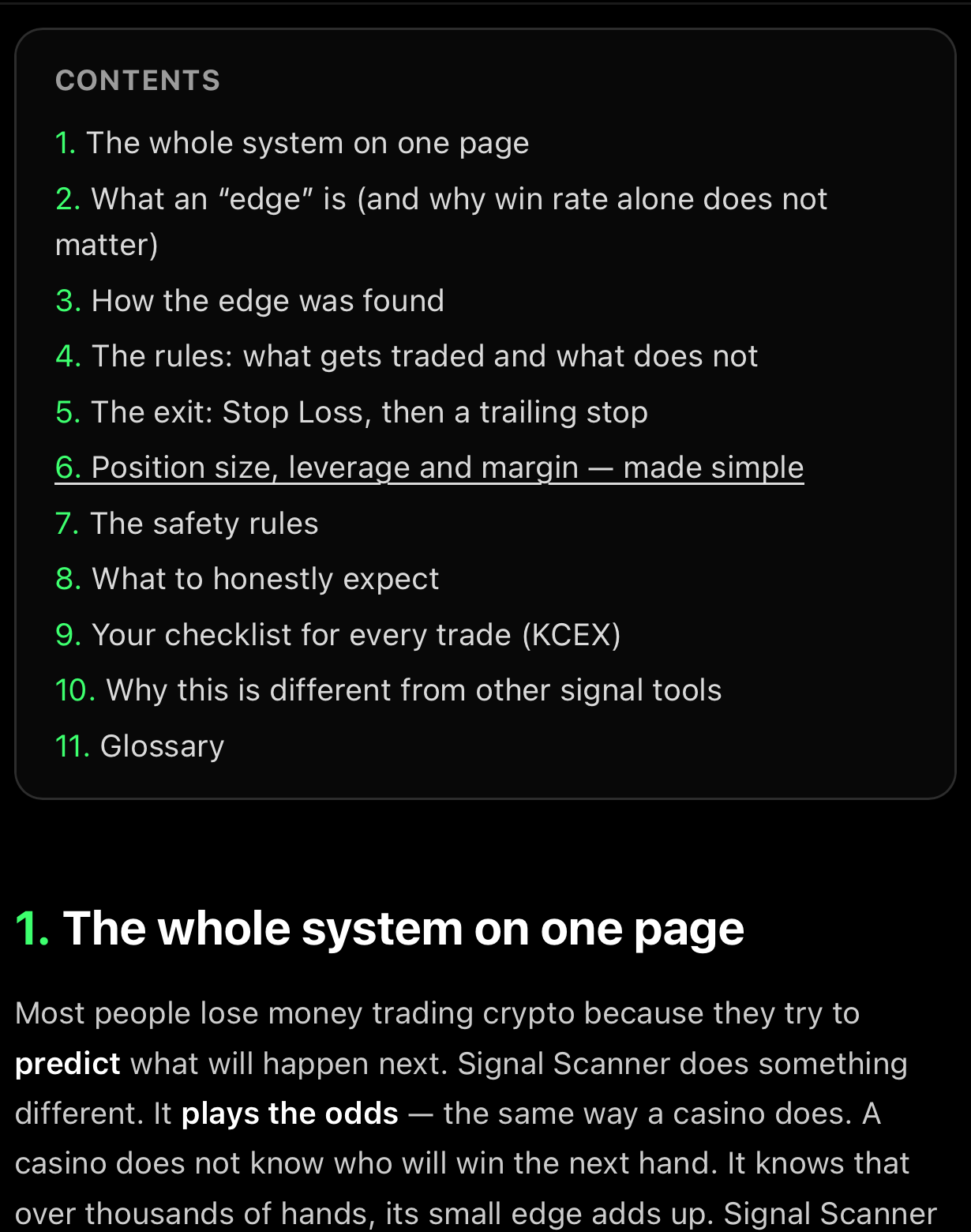
Members get the full guide: what an edge is and why win rate alone doesn’t matter, how the backtest was built, what gets traded and what doesn’t, how the Stop Loss and trailing stop work, how to size, the safety rules, what to honestly expect, and a per-trade checklist for your exchange. Written at a level anyone can read, with every number tied back to the measurement.

A signal that hasn’t been measured is a guess with a logo. Here is the measurement behind every alert Signal Scanner sends.
We would rather you join knowing exactly how this feels month to month than be surprised in week three.
The losers are the cost of doing business, and the Stop Loss keeps every one of them small and known in advance. One winner left to run pays for several.
Trending weeks bring several setups a day; choppy weeks one or two; release weeks none. Nearly half of all weeks are flat or slightly red. Judge the system by the month and the quarter, never the day.
Four or five losses in a row is normal. A drawdown of 25–35% from a peak will happen somewhere along the way. That is not the system breaking — that is what every measured edge looks like from the inside.
Skipping the ones that “look wrong” or doubling the ones that “look right” turns a measured edge back into a coin flip. The replay never did either. Neither should you.
Cancel anytime. No contract.
Already a member? Sign in